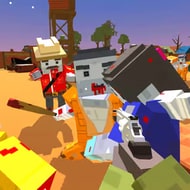
Zombie Siege Outbreak looks like a simple base-defense game in its first wave, but it plays like a resource-management puzzle once the third or fourth night rolls around and every barricade needs repairing at the same time.
| Genre |
Survival Strategy |
| Main Focus |
Base Defense |
| Core Loop |
Build, Defend, Upgrade |
| Platform |
Browser |
Setting Up the First Barricade
Early nights in Zombie Siege Outbreak are forgiving on purpose. A handful of zombies approach a single weak point in your perimeter, and one or two barricades placed in the right spot handle the wave without much drama. This stretch teaches placement basics before punishing mistakes.
The game’s difficulty ramps through wave count rather than sudden spikes, so the third or fourth siege is rarely a shock in isolation. What catches new players off guard is how quickly repair costs pile up across multiple damaged sections at once.
Balancing Repairs Against New Defenses
Every barricade takes damage during a wave, and resources spent repairing it are resources not spent expanding your perimeter or upgrading a turret. This tension is the actual game hiding underneath the zombie theme, and it only gets sharper as more of the map opens up.
Players who pour everything into offense early often find their walls crumbling by night five, while players who over-invest in repairs alone stay safe but never gain enough ground to out-produce the horde’s growth. The balance point shifts constantly, which is why veteran players describe the mid-game as the hardest stretch, harder than the supposed late-game difficulty spike.
- Prioritize repairing the section that failed last wave, not the one that looks worst cosmetically.
- Save a small resource buffer for emergency wall placement rather than spending down to zero each night.
Upgrading Without Losing Ground
Turret upgrades in Zombie Siege Outbreak cost the same pool of resources as repairs and expansion, which forces a constant choice: strengthen what already works, or patch what’s currently failing. Spending everything on a single powerful turret while the rest of the perimeter goes unrepaired tends to fail the very next wave, since zombies simply route around the strong point toward whatever wall is weakest.
Veteran players tend to upgrade in small, spread-out increments rather than committing to one dominant position, since the horde in Zombie Siege Outbreak consistently punishes any perimeter with a single obvious soft spot.
Frequently Asked Questions About Zombie Siege Outbreak
Why does my base collapse on a night that looked easier than the one before?
Repair debt carries forward between nights, so a wave that looks light on paper can still overwhelm a perimeter that entered it already damaged from the previous siege.
Should I focus resources on one strong turret or spread upgrades evenly?
Spreading upgrades tends to hold up better, since zombies path toward the weakest section of the perimeter rather than attacking a single strong point directly.
Zombie Siege Outbreak rewards players who treat every night as a budget problem first and a combat problem second, since the zombies themselves rarely do anything unpredictable beyond swarming the weakest point in your line.