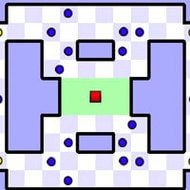
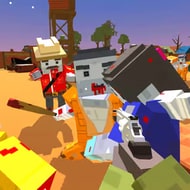
In IZOWAVE – Build and Defend you start with a single generator, a handful of resources, and a perimeter that looks laughably easy to hold, which matters because the first night is the only one that will ever feel that calm.
| Genre |
Base-Building Strategy |
| Main Focus |
Wave Defense |
| Core Loop |
Gather, Build, Defend |
| Platform |
Browser |
Day and Night in IZOWAVE
Daylight in IZOWAVE is for gathering and construction; night is for surviving what you built. This split structures the entire game around a simple question repeated every cycle: did you spend the day preparing for the wave that’s actually coming, or the wave you assumed was coming?
Turrets placed along choke points do most of the defensive work, but they need power routed to them from a generator, and running out of power mid-wave is a far more common death than being outright overrun by enemy numbers.
Choosing Turret Placement Over Turret Count
Beginners tend to spread turrets evenly around the perimeter, treating every direction as equally threatened. Experienced players instead build a small number of dense choke points, since IZOWAVE’s enemies path toward the weakest opening rather than attacking uniformly.
Walls matter as much as weapons here. A wall segment that redirects an enemy wave toward a turret cluster does more work than another turret placed in isolation, and players who ignore wall layout usually hit a wall of their own around the mid-game waves.
Expanding the Perimeter Without Overextending
Every expansion in IZOWAVE stretches the area a generator has to power and the number of choke points that need defending. Pushing the perimeter outward too early spreads power thin across more turrets than the current generator can reliably support, which is a slower, quieter way to lose than being overrun outright.
Resource nodes outside the starting perimeter are tempting because they fund faster upgrades, but reaching them means defending new ground before the existing defenses are fully paid off. Players who expand in small, fully-powered steps tend to outlast players who race for resources and leave gaps in coverage behind them.
What should I prioritize in the first few in-game days?
Securing a stable power supply from your generator before expanding turret count tends to matter more than raw firepower, since an unpowered turret contributes nothing during a wave regardless of how upgraded it is.
Why do my defenses fail even with more turrets than before?
Turret count without deliberate choke-point design usually means enemies find the gap between them, so reviewing your wall layout often fixes more failed waves than adding another turret does.
Is it better to expand quickly or consolidate the starting perimeter?
Consolidating first almost always holds up better, since IZOWAVE punishes an expanded perimeter that can’t keep every turret powered far more harshly than it punishes a smaller, fully-defended one.
IZOWAVE – Build and Defend keeps its core loop simple on paper, but the gap between “enough turrets” and “correctly placed, fully-powered turrets” is where most runs are decided, night after night, long after the tutorial wave has been forgotten.