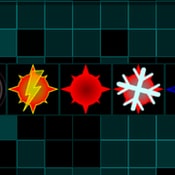
A single firefly stored too long in Shady Bears usually goes to waste — that’s the first hard lesson most players learn, often at the exact moment their own shadow finally boxes them into a corner with no way out.
Building a Mental Map of Where Your Shadow Will Be
The shadow in Shady Bears doesn’t react to what you’re doing right now, it replays what you did a few seconds ago, and that gap between action and consequence is the entire design of the game compressed into one mechanic. Every jump, every direction change, every pause becomes a data point your shadow will eventually recreate. Players who treat the level as a static obstacle course get overwhelmed quickly, because the actual obstacle course is one you’re building yourself with every step.
Veteran players describe this as playing two moves ahead: the move you’re making now, and the move your shadow will be making once it reaches that same spot. Sound design plays a small but real role here too — a subtle audio cue plays as the shadow closes distance, and players who learn to listen for it react faster than players relying purely on peripheral vision.
Honey, Bees, and the Real Cost of Greed
Honey pots boost your acorn total significantly, which makes them tempting even when the surrounding area is already risky. The catch is the swarm of bees that honey attracts, adding a hazard that has nothing to do with your shadow and everything to do with pure timing. A player chasing every honey pot on a level tends to die more often than one who skips honey in cramped sections and only grabs it in open areas with a clear retreat path.
- Scan the area around a honey pot before committing to grab it
- Skip honey entirely if a shadow is already occupying the nearby space
- Grab honey early in open sections where bees have room to disperse
- Treat honey as a bonus, not a required objective, on tighter stages
This risk-reward layer is one of the more debated parts of Shady Bears among players — some argue the bee penalty is too punishing relative to the acorn bonus, while others say the tension is exactly what keeps a simple collect-the-item loop from feeling flat.
Environmental Variety Across the Later Stages
Once you move past the earlier, more forgiving stages, Shady Bears starts introducing distinct visual settings, from misty forest platforms to tighter crystal-cave layouts with narrower walkways. The environment changes aren’t purely cosmetic — narrower stages mean less room to execute the wide looping paths that work so well early on, forcing players to rely more heavily on fireflies rather than pure route-planning.
By the time you reach these denser layouts, the game has quietly taught you most of its real lessons: read the shadow delay, treat honey as optional, and never save a firefly past the point where it could have saved you.
Four-Player Chaos and Shared-Screen Strategy
Shady Bears supports up to four bears on one screen, and multiplayer changes the entire rhythm of the game. Every shadow on screen is dangerous to every player, not just the one who created it, which means a careless move from one teammate can end another player’s run entirely. Groups that succeed tend to divide the map instead of clustering together, since four bears moving through the same corridor also means four shadows converging on that same corridor moments later.
Casual players often use multiplayer mode purely for the chaos and laughs of dodging each other’s mistakes, while competitive groups treat it as a scoring race, splitting acorn territory deliberately at the start of a round to avoid stepping on each other’s collection routes.
Common Questions From New Players
New players frequently ask why touching a shadow ends the run instantly rather than just costing a life — that’s simply the core rule of Shady Bears, and it’s non-negotiable across every stage and every difficulty. Another common question is whether the shadow delay is fixed or changes over time; it generally stays consistent within a single level but can feel tighter on later stages due to reduced platform space rather than any actual change in timing. Finally, players often wonder if there’s a way to permanently remove a shadow — fireflies only clear shadows temporarily, so the threat always returns once their effect wears off, which is exactly what keeps every stage feeling tense from start to finish.
What separates a strong Shady Bears run from a short one usually comes down to a single decision made three or four seconds earlier — whether you looped wide instead of doubling back, and whether you spent that firefly the moment your shadow near a honey pot demanded it instead of holding on and hoping for a better moment that never arrived.